“Life-changing”: Jess Innes-Irons on receiving the Centre’s Dr Dakhina Mitra Scholarship
We speak to the recipient of the inaugural Dr Dakhina Mitra Scholarship about Creative Arts Therapy, and how it can help children and young people to heal from trauma.
12 May 2025
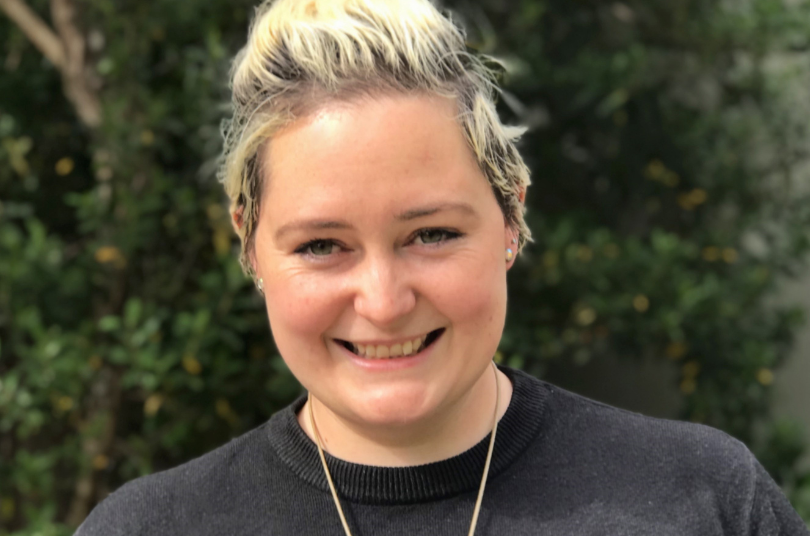
As someone who sees firsthand how pain can be transformed into healing, Jess Innes-Irons is a fitting winner of the Centre’s inaugural Dr Dakhina Mitra Scholarship.
The scholarship was founded following the death of a cherished Centre colleague, Dr Dakhina Mitra, who had dedicated her career to improving the lives of children facing disadvantage and hardships. In her honour, the Centre established the scholarship to support child and family services professionals in their studies or professional development – turning a painful loss into an opportunity to support others.
Jess, a Creative Arts Therapist (LGBTIQ+, Youth and Family Violence) at Family Access Network (FAN), is the first to receive the scholarship – and it’s already had a significant impact on her career.
“It feels really life-changing, without that being an overstatement,” she says. “It actually changes the direction of how I can work with young people, and I feel so incredibly lucky to be able to offer it back to them.”
The scholarship allowed Jess to enrol in a Sensorimotor Psychotherapy course by Dr Pat Ogden, the founder of this specific branch of therapy, which is a body-centred approach to healing trauma and attachment issues.
“They offer it all around the world, but they haven’t offered it in an Australian time zone for a very long time,” Jess explains. “There are only a small number of practitioners trained in Sensorimotor Psychotherapy in Australia.”
She knew from the outset that this was what she wanted to put the funding towards but was doubtful she’d be chosen as the successful applicant. Once she was notified of her success, things moved quite quickly.
“I was like ‘there’s no way I’m getting picked for this’,” she says. “It was so outside the box. I was looking at the criteria and looking at the pitch for the scholarship and thinking ‘I don’t know’, so I was quite shocked when I heard from the Centre.”
“I hadn’t even applied for the course, so then I was having to email them saying ‘I’ve just put my application in, please let me in’,” she laughs. “It was less than 48 hours between me finding out that I’d been selected for the scholarship and suddenly being in class.”
The whirlwind was worth it though, with Jess finding her first three days of the course to be “amazing and intense and really affirming”.
“We literally spent three full days, like nine to five-thirty, and in those three days, we only learned to do the first 10 minutes of the process. But it was really nice to practise the skill, and I’ve come out of it being able to do it in practice with clients now.”
With a clear passion for the work she does, anyone would think art therapy had long been Jess’ dream – but initially, she didn’t know much about the field. She originally studied nursing at university, before landing in a double degree of arts and commerce, going on to complete an honours degree in expressions of queer grief and trauma on social media, and eventually finding herself drawn to the profession.
“Advertising was my big idea at the time,” she says. “But then a couple of things happened in my personal life, and I just woke up one day and was like ‘I’m going to go and study art therapy’.”
It took many years of study to get where she is today, but she’s rewarded by the knowledge that what she does has immense positive impact on the lives of the young people she works with.
“It’s been part of my process to learn and understand how it works, why it works, and that it does work,” says Jess. “It’s really hard for people to find the words to articulate what’s happened to them or what’s going on for them, that it can actually be quite impossible sometimes.”
“But art therapy is an externalising process. The idea is that you can take the feeling and translate it into something, so in some ways, you’re completing what that emotion or experience needs.”
Not only does this provide a safe environment for young people to explore their feelings and past trauma, it also gives them space to play to their strengths.
“Some of these young people are so talented,” says Jess. “They get to show me how good they are in that space, and they get to have this success and this boost of self-confidence. It’s nice to see them have something to feel good about themselves for and to have it celebrated, understood, and recognised.”

The success of Jess’ work and the program speaks for itself, demonstrating how powerful and transformative exploration through art can be.
“We did an evaluation of our program last year, and one of the things that really sticks with me is that all our past participants who were in the evaluation said they were in a better place to seek help in the future,” Jess says.
“It’s not one of the big main goals of the program, but it’s something I care about, thinking about them possibly needing service support for a long time in their lives, to make it safer and better and have them more prepared to be able to do that.”
“There are lots of findings in that report that I think are pretty special, but that one particularly,” she says. “It’s like we can travel this little bit of the journey for the time that we can travel it together, but then I can send you onwards knowing that you have had a good experience here, and that you can be more ready to engage with whatever comes next.”
Michele Lonsdale, the Centre’s Deputy CEO and Director of Policy, Research and Advocacy, says: “Jess’ passion for her work in supporting young people’s healing through the vehicle of creative arts makes her a thoroughly worthy recipient of the inaugural Dr Dakhina Mitra reward.”
Related articles
News
Building a pathway to a safe and stable home
11 Nov 2026
For many young people, moving out of the family home is an exciting step towards independence. Freedom, with the knowledge that they still have people to call for advice and a home they can always return to. Young people leaving care often don't have that safety net.
News
Learn, connect and share at the 2027 Carer Kafe Learning and Development Conference
05 Nov 2026
The Centre’s Carer Kafe program is pleased to announce the 2027 Carer Kafe Learning and Development Conference to be held at the Sofitel Melbourne on Collins from the 22 to 23 April, 2027.
News
New MARAM Child and Young Person Practice Guides released
04 Nov 2026
The Child and Young Person MARAM Practice Guides have been released, providing new guidance to support professionals working with children and young people affected by family violence.Last updated: 12 May 2025