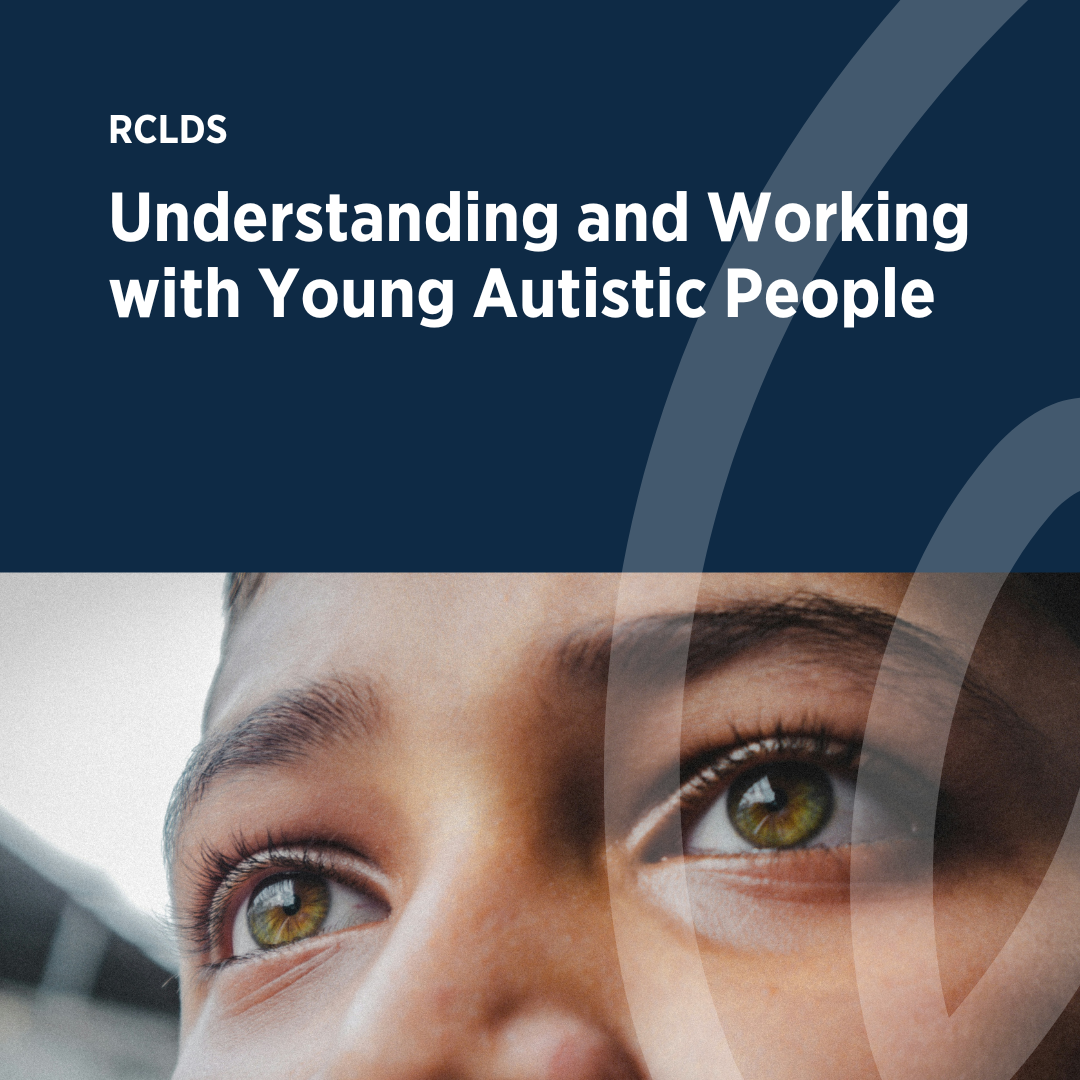
Understanding and Working with Young Autistic People (RCLDS)
Thursday June 19, 2025, 9:00 am - 1:00 pm
- This event has passed.
Course Overview
The workshop approaches the topic of autism through the lens of ‘information’: how do ‘neurotypical’ people and ‘neurodivergent’ people experience the world around them?
Using the categories in the formal definition of autism, we explore how each common characteristic of autism – from social awkwardness to sensory sensitivities – can be understood as different ways of processing information. We demonstrate a variety of techniques to help a non-autistic person understand what it is like to be autistic.
The workshop then covers a range of strategies to identify and respond to an autistic person’s needs. The workshop discusses:
- Identifying signs of sensory overload, and techniques to respond.
- Planning the young person’s environment to both reduce overload and to allow for sensory seeking.
- Relaxation techniques for children and young people.
- Strength-based coping strategies.
- Tips to create social-story models to help autistic young people carry out tasks.
- Understanding the complexities of autism and adolescence.
Learning Outcomes
At the end of this course, you will be able to:
- Understand the key characteristics of autism, drawing on the latest research.
- Connect scientific knowledage about autism with outward behaviour.
- Aquire a range of techniques to communicate about autism with parents and carers.
- Understand how sensory processing can lead to complex behaviour.
- Apply techniques to organise the sensory environment of a young autistic person so that it suits their particular needs.
- Respond to, and manage, times of sensory overload.
- How to reflect on complex behaviours and tailor restorative practices.
- Support and autistic person to regulate themselves and manage tasks.
To register, follow the link below and select ‘Residential Care’ in the program field.