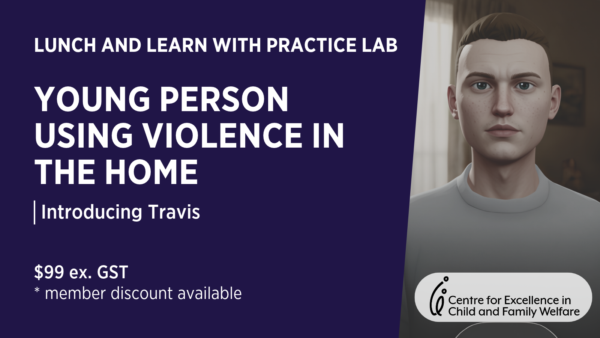
A workshop exploring neurodiversity and YPVITH through a strengths-based lens.
Therapeutic strategies and practice modifications to enhance engagement, improve outcomes for neurodivergent young people using violence in the home.
Last updated: 12 Aug 2026

Interactive training is designed for professionals across disciplines and service sectors who work with neurodivergent young people using violence in the home.
This 3.5-hour interactive training is designed for professionals across disciplines and service sectors who work with neurodivergent young people using violence in the home. Grounded in The Centre’s Four Pillars of Practice Model for YPVITH, the workshop explores neurodiversity through a strengths-based lens, with a focus on ADHD and Autism. It aims to deepen practitioners’ understanding by examining varied presentations and challenging common myths.
The session also explores the connection between nervous system dysregulation and aggressive behaviours, offering practical insights into how these dynamics may influence a young person’s use of violence.
Participants will gain therapeutic strategies and practice modifications to enhance engagement, improve outcomes for neurodivergent young people, and support families and carers in better understanding neurodiversity.
Please note: This training is not intended for parents or carers, nor for practitioners working with young people using violence in contexts outside the home, such as peer, community, or intimate partner violence.
Key focus areas included
- Understanding neurodivergence in young people, with a focus on Autism and ADHD
- Exploring sensory, interoceptive, executive functioning, and social/communication differences
- Recognising the role of nervous system dysregulation in aggressive behaviours
- Understanding how neurodiversity can influence family dynamics and safety in the home
- Applying strengths-based, neuro-affirming approaches to engagement and therapeutic work
- Adapting practice to better support neurodivergent young people, families, and carers
- Integrating regulation strategies into whole-of-family safety planning
Learning outcomes
By the end of this workshop, participants will be able to:
- Understand common presentations of neurodivergence in young people, particularly Autism and ADHD, and how sensory, interoceptive, executive functioning, and social/communication differences contribute to nervous system dysregulation.
- Explore how neurodiversity influences family dynamics and may contribute to patterns of aggressive behaviour in the home.
- Gain practical engagement and therapeutic strategies that support relational work with neurodivergent young people.
- Learn how regulation strategies can be integrated into whole-of-family safety planning to promote stability and wellbeing.
Intended audience
This training is best suited to professionals working directly with neurodivergent young people who are using violence in the home. It is relevant across service sectors, including child and family services, mental health, education, and youth justice. Please note that this workshop is not intended for parents or carers, or for practitioners working with young people using violence in contexts outside the home.
Delivery and suitability
This 3.5-hour workshop is designed to be delivered online. It is designed to be interactive and reflective, with opportunities for discussion, practical application, and skill-building.
Participant numbers
To support active participation, each session is capped at 30 participants.